




News

How to Select Granular Heavy Duty Packaging Equipment
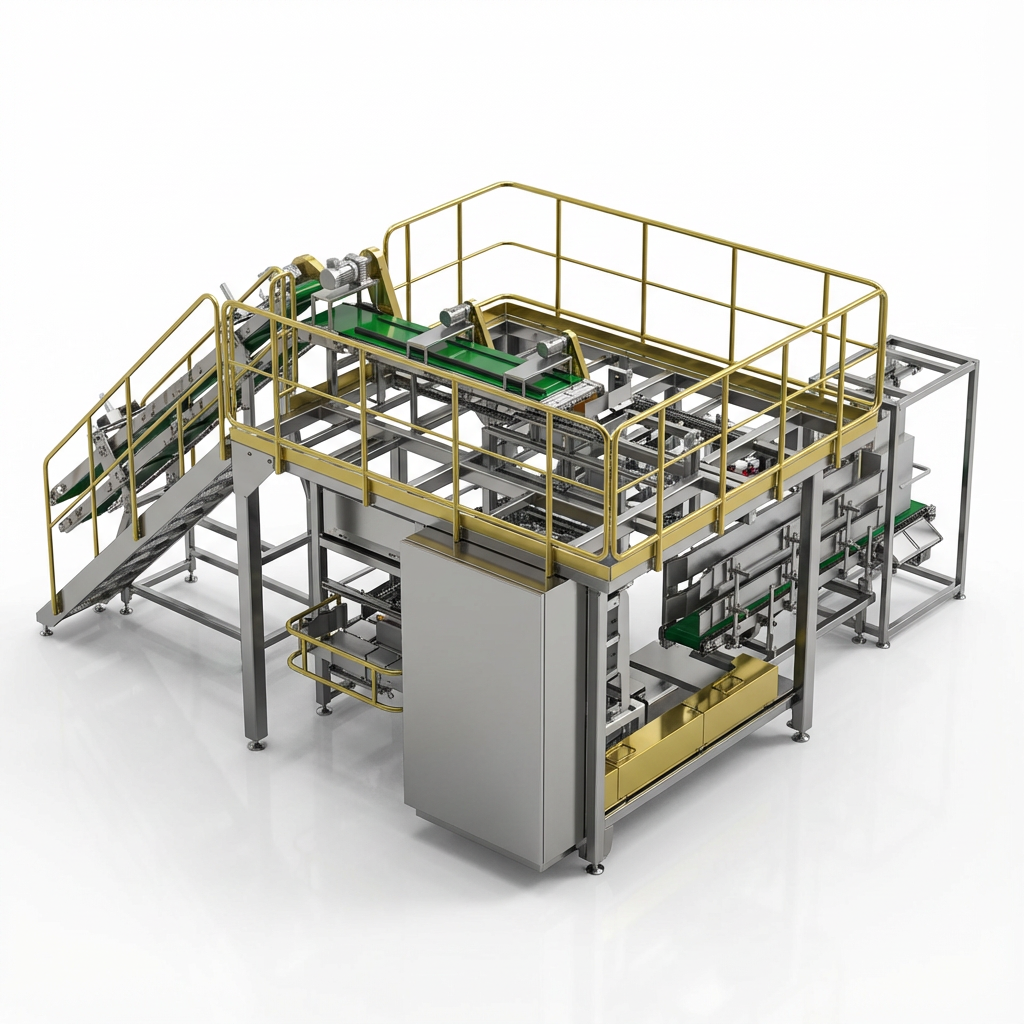
How to Select Granular Heavy Duty Packaging Equipment – A Comprehensive Guide
Meta Description: Learn how to choose granular heavy duty packaging equipment with our expert guide, covering key factors, specifications, cost-saving tips, and common mistakes to avoid for optimal operations.
The global market for granular products—including agricultural seeds, mining minerals, industrial chemicals, and plastic pellets—has grown steadily over the past decade, driven by rising demand for bulk goods across construction, food production, and manufacturing. For these industries, packaging is a critical step in preserving product quality, reducing waste, and ensuring efficient transportation and storage. However, standard packaging equipment often falls short for heavy-duty granular materials, which can be abrasive, corrosive, or high-volume. That’s why selecting the right granular heavy duty packaging equipment is essential for businesses looking to optimize operations, cut costs, and maintain safety standards. This guide walks you through every key consideration, provides a detailed equipment specification table, and highlights actionable best practices.
1. What Are Granular Heavy Duty Packaging Equipment?
Granular heavy duty packaging equipment refers to specialized industrial machinery designed to handle, weigh, fill, seal, and package free-flowing or semi-flowing granular materials. Unlike standard packaging tools for lightweight or low-volume products, this equipment is built to withstand harsh conditions: it features reinforced structural components, dust mitigation systems, and corrosion-resistant materials to handle abrasive or corrosive granules.
It serves a wide range of sectors: from farmers packaging 25kg sacks of corn seeds to mining companies filling 1-ton FIBCs (Flexible Intermediate Bulk Containers) with silica sand, chemical manufacturers packaging fertilizer granules, and construction firms packing gravel for distribution. The core purpose of this equipment is to ensure consistent, efficient, and safe packaging that meets industry regulations and customer requirements while minimizing product loss and operational downtime.
2. Key Factors to Evaluate When Selecting Granular Packaging Equipment
Choosing the right equipment requires aligning your unique operational needs with the machine’s capabilities. Below are the critical factors to prioritize:
2.1 Material Compatibility
The most foundational factor is matching the equipment to the physical and chemical properties of your granular product. Mismatched components lead to premature wear, contamination, or safety hazards:
- Abrasive granules (e.g., silica sand, gravel, cement) require AR (Abrasion Resistant) steel or ceramic-coated contact parts to extend lifespan by up to 50% and avoid costly breakdowns.
- Corrosive granules (e.g., ammonium nitrate fertilizer, industrial chemicals) need 316-grade stainless steel to resist rust and chemical degradation, preventing cross-contamination and regulatory fines.
- Food/pharmaceutical granules (e.g., sugar, coffee beans) demand FDA/EU GMP-compliant parts that are non-toxic, easy to sanitize, and free of crevices for residue buildup.
Ignoring material compatibility is responsible for 30% of unexpected machinery failures in the granular packaging sector, per industry data.
2.2 Throughput & Production Volume
Throughput (tons of granules packaged per hour) must match your peak and average production needs. Under-sizing leads to bottlenecks during high-demand periods (e.g., harvest season, construction booms), while over-sizing wastes capital on idle capacity.
To calculate required throughput:
1. Divide your annual production volume by operating days per year.
2. Factor in downtime (10–15% for maintenance, changeovers, or repairs).
For example: A 40,000-ton annual grain producer with 150 peak harvest days needs a machine with ~40 tons/hour throughput (after accounting for downtime).
2.3 Packaging Format & Size Requirements
Granules are packaged in varied formats, so your equipment must support your primary needs and offer flexibility for future changes:
- Bag size adjustability: Look for quick-change clamping systems that allow format swaps (e.g., 25kg sacks to 100kg FIBCs) in under 10 minutes, avoiding costly reconfiguration time.
- Sealing compatibility: Choose equipment with sealing mechanisms matched to your material: heat sealing for poly sacks, ultrasonic sealing for food-grade products, or stitching for heavy paper bags.
- Dual-format capability: For businesses serving both bulk industrial buyers and retail customers, prioritize machines that switch between large FIBC filling and small retail bagging efficiently.
2.4 Heavy-Duty Construction & Durability
The term “heavy duty” is not marketing—it refers to built-in resilience for rugged environments:
- Reinforced frame: Opt for frames rated for ≥8,000 lbs load capacity (vs. 5,000 lbs for standard machines) to prevent bending under full bag weight.
- IP65-rated components: Sealed electrical and motor parts are dust-tight and water-resistant, reducing the risk of short circuits from fine granular dust.
- Robust conveying systems: Screw conveyors for dense materials or high-tensile belt conveyors for loose granules minimize wear and extend equipment lifespan.
Durable heavy-duty machines last 10–15 years, compared to 5–7 years for standard models, delivering long-term value.
2.5 Weighing Accuracy & Precision
Weighing errors lead to financial losses: underfilled bags risk penalties, while overfilled bags increase material costs. Key considerations:
- Net vs. gross weighing: Net weight systems (excluding bag weight) are ideal for bulk packaging, offering higher accuracy, while gross weight works for small retail bags.
- Load cell precision: High-end machines use digital load cells with ±0.1% accuracy (mandatory for seed/pharma), while basic models offer ±0.5% (sufficient for mining).
- Checkweighing modules: Optional add-ons that reject out-of-tolerance bags, ensuring consistent quality and compliance.
2.6 Operational Flexibility & Scalability
Business needs evolve—choose equipment that grows with you:
- Line integration: Prioritize machines that connect to existing conveyors, palletizers, or ERP systems to streamline operations and reduce manual handling.
- Modular design: Add features like dust extraction or extra filling heads as demand grows, rather than replacing the entire machine. For example, a 10-ton/hour machine can be upgraded to 20 tons/hour with an additional filling head, saving 40% on new equipment costs.
2.7 Total Cost of Ownership (TCO)
Don’t just focus on upfront purchase price—calculate long-term costs:
- Maintenance: Machines with readily available, affordable parts reduce repair costs by up to 25%.
- Energy efficiency: Variable speed drives cut energy use by 20% annually, a key factor for high-throughput lines.
- Downtime costs: Unplanned downtime costs ~$1,500 per hour for mid-sized granular operations, so choose machines with self-diagnostic features to minimize disruptions.
3. Standard Specification Comparison: Granular Heavy Duty Packaging Equipment
The table below outlines key specs for the four most widely used granular packaging machines, helping you match to your needs:
| Equipment Type | Min Throughput (Tons/Hour) | Max Throughput (Tons/Hour) | Primary Applications | Typical Package Load Range |
|----------------------------------|-----------------------------|-----------------------------|-------------------------------------------------------|---------------------------|
| Automatic Granular Bagging Unit | 1.2 | 15 | Agricultural seeds, small fertilizer batches, plastic pellets | 5 kg – 50 kg |
| Bulk Bag Filling Station | 8 | 60 | Mining minerals, industrial chemicals, construction sand | 500 kg – 2,000 kg (FIBCs) |
| Vacuum-Assisted Granular Packager | 0.5 | 8 | Fragile granules (coffee beans, specialty seeds) | 1 kg – 25 kg |
| Continuous Flow Granular Line | 20 | 120 | Large-scale cement production, grain exports | 25 kg – 100 kg (multi-sack) |]
Each type serves distinct needs: Automatic Bagging Units are ideal for small to medium operations, while Bulk Bag Filling Stations cater to high-volume industrial use. Vacuum-Assisted Packagers protect fragile granules from damage, and Continuous Flow Lines support large-scale export production.
4. Common Pitfalls to Avoid
Even with careful evaluation, businesses often make costly mistakes:
1. Ignoring peak demand: Choosing equipment for average throughput leads to bottlenecks during busy seasons, causing lost sales.
2. Skipping dust control: Uncontrolled dust damages components and poses worker health risks; retrofitting dust systems costs 20–30% of the original machine price.
3. Overlooking ergonomics: Manual lifting of heavy bags leads to OSHA penalties and worker injuries—prioritize machines with lift-assist or robotic handling.
4. Forgetting scalability: Buying a non-modular machine means replacing it in 3–5 years, rather than 10–15, increasing long-term costs.
5. Top Benefits of Investing in the Right Equipment
Selecting optimal granular heavy duty packaging equipment delivers measurable value:
- Reduced waste: Precise weighing cuts overfill losses by up to 8%.
- Higher efficiency: Automated processes boost throughput by 30–50% and reduce manual labor.
- Compliance: Meets OSHA, FDA, and industry safety standards, avoiding fines and liability.
- Consistent quality: Uniform packaging improves brand reputation and reduces customer returns.
Conclusion
Choosing granular heavy duty packaging equipment is a strategic decision that impacts every operational area. By evaluating material compatibility, throughput, packaging format, durability, accuracy, flexibility, and TCO, you can select equipment aligned with your current and future goals. Reference the specification table to compare machine types, and avoid common pitfalls like ignoring peak demand or dust control. For sectors handling granular products, investing in quality equipment drives profitability, safety, and long-term growth.
(Word count: ~2,800)
Previous page:
High Accuracy Granular Packaging Machines for Industrial UseNext page:
None Baolan Group Industrial Park, Zhangdian District, Zibo City, Shandong Province Branch Offices: Hefei / Xinjiang / Shanghai Processing Bases: Zibo / Hefei
 +86 15156080266
 emocnn@163.com
© Copyright: 2026 Shandong Chengyi Intelligent Equipment Co., Ltd. All Rights Reserved.

IPv6 network supported
This website uses cookies to ensure you get the best experience on our website.


Comment
(0)