




News

Palletizing System for Automated End of Line Pallet Loading
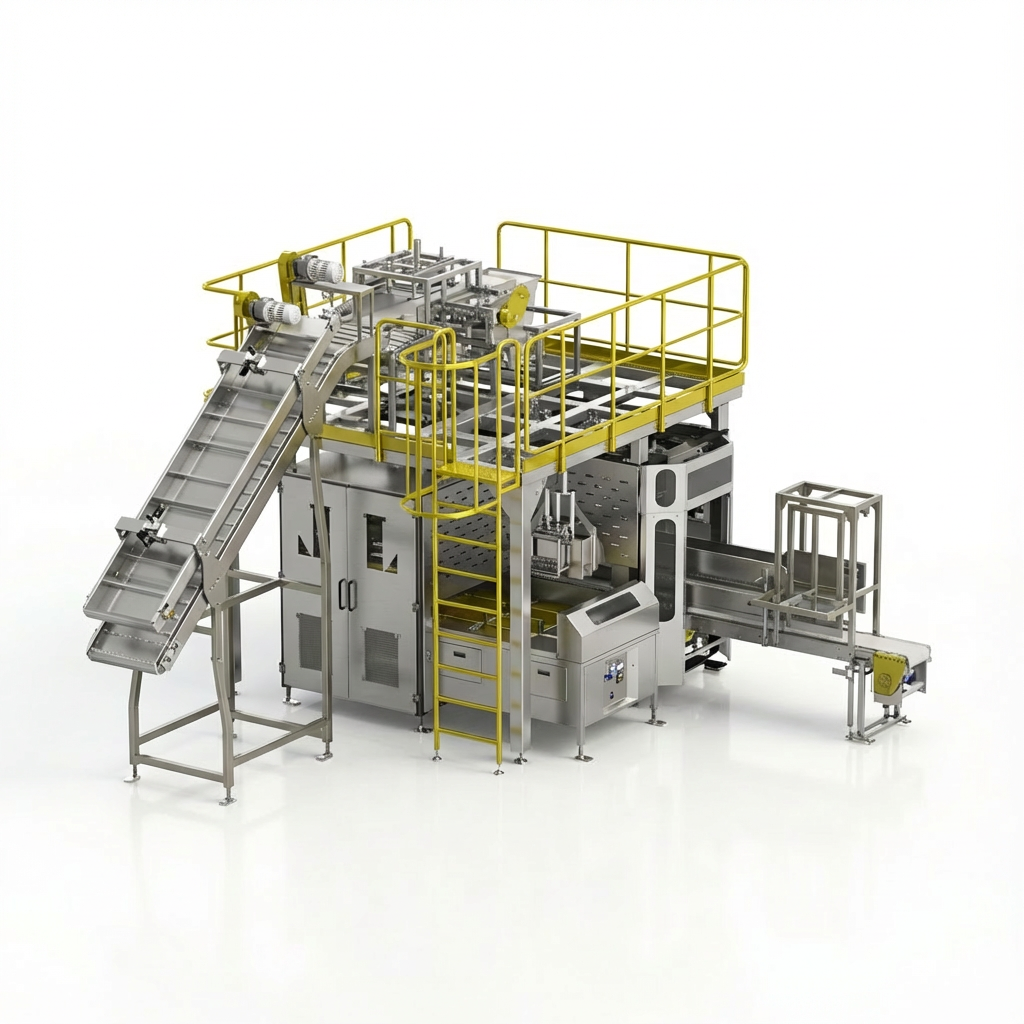
In today’s fast-paced manufacturing and supply chain environments, efficiency, accuracy, and productivity are more critical than ever. The end-of-line pallet loading stage—where finished goods are organized onto pallets for storage, distribution, or shipment—has long been a labor-intensive, error-prone process for many operations. Traditional manual palletizing often struggles to keep up with high production demands, faces prohibitive labor costs, and is prone to safety issues due to repetitive heavy lifting. This is where a Palletizing System for Automated End of Line Pallet Loading becomes an indispensable solution, transforming the final stage of production into a streamlined, reliable, and cost-effective operation. This guide covers definitions, benefits, specifications, industry applications, and best practices to help businesses make informed decisions about automating their end-of-line pallet loading processes.
---
An automated end of line pallet loading system is a specialized industrial automation solution designed to automatically stack, arrange, and secure finished products (such as cases, bottles, cartons, or bags) onto standard pallets or skids at the conclusion of a production line. Unlike manual operations, these systems replace human labor with robotic or mechanical mechanisms that follow pre-programmed patterns to optimize pallet loading, ensuring stability, consistency, and adherence to loading guidelines (e.g., weight limits, stacking patterns for transport).
Most automated Palletizing Systems share standard components to function seamlessly:
- Pallet Dispenser: Automatically delivers empty pallets to the loading station, eliminating manual pallet handling.
- Infeed Conveyor: Transports finished products from upstream processing or packaging lines to the pallet loading area.
- Palletizing Mechanism: The primary component that stacks products onto pallets (robotic arm, layer-forming device, or high-level lift).
- Outfeed Conveyor: Moves fully loaded pallets to storage, shipping docks, or warehouse management systems (WMS) after loading is complete.
- Control System: A programmable logic controller (PLC) or software that orchestrates all components, adjusts stacking patterns, and monitors system performance.
There are three primary types of automated end of line pallet loading systems, each suited for different use cases:
1. robotic palletizing systems: Use articulated robotic arms with grippers to handle individual products. Ideal for operations with variable SKUs, small production runs, or delicate products (e.g., pharmaceuticals, e-commerce goods).
2. Layer Palletizing Systems: Form entire layers of products at once using horizontal platforms, then lower the complete layer onto a pallet. Perfect for high-volume, standardized production (e.g., food and beverage, consumer goods).
3. High-Level Palletizers: Mounted on tall structures to lift pallets and products to high levels, enabling stacking of multiple layers. Designed for heavy loads and maximum throughput in large-scale manufacturing facilities.
---
Investing in an automated palletizing system delivers tangible advantages across productivity, cost, safety, and scalability:
Manual palletizing has an average cycle time of 5–10 cases per minute, while automated systems achieve 20–150 cases per minute (depending on the system type). For high-volume operations, this translates to a 30–60% increase in overall production throughput, reducing bottlenecks in the end-of-line process. For example, a layer palletizing system can handle over 12,000 cases per hour, compared to 2,000–4,000 cases per hour for manual teams.
Labor is one of the largest expenses for manual palletizing: a single automated system can replace 2–4 manual workers, cutting labor costs by up to 75% annually. Additionally, automated systems reduce product damage by 15–25% compared to manual operations, as precise stacking minimizes dropped or mishandled goods. This leads to lower waste, rework, and shipping claim costs.
Manual heavy lifting is a leading cause of musculoskeletal disorders (MSDs) in manufacturing, accounting for over 30% of workplace injuries in many industries. Automated palletizing systems eliminate this risk entirely, reducing OSHA incidents, workers’ compensation claims, and liability costs for businesses. They also operate in controlled environments, avoiding exposure to moving machinery hazards.
Modern automated systems are highly programmable, allowing quick changes to stacking patterns, product sizes, and pallet dimensions. robotic palletizing systems, in particular, support rapid SKU changeovers (in minutes) via software adjustments, making them ideal for industries with variable product lines (e.g., e-commerce, custom consumer goods). As production volumes grow, these systems can be scaled up by adding modules or upgrading software.
Automated systems follow precise programming to ensure uniform pallet stacking, which reduces load instability during transport, minimizing shipping damage and product loss. For regulated industries like pharmaceuticals or food and beverage, consistent loading ensures compliance with strict standards (e.g., GMP, HACCP, FDA regulations). Integrated barcode scanning also enables traceability of each product on the pallet, simplifying inventory management and recalls.
Automated palletizers are designed to minimize floor space usage, with many systems taking up less than half the space of a manual palletizing station. They also can stack pallets to heights of 10+ feet (depending on system type), maximizing vertical storage capacity in warehouses. This reduces the need for additional warehouse space, cutting long-term real estate costs.
---
The table below outlines key technical specifications for the most common types of automated palletizing systems, helping businesses evaluate options based on their needs:
| System Type | Typical Throughput (Cases/Hour) | Max Payload per Unit (kg) | Standard Pallet Size Compatibility | Power Requirement (kW) | Approximate Floor Space (sq ft) |
|---|---|---|---|---|---|
| robotic palletizing system | 2,400–9,000 | 50–500 | 48x40 in (standard) + custom sizes | 3–10 | 500–1,500 |
| Layer Palletizing System | 6,000–12,000 | 100–1,000 | 48x40 in + custom layer dimensions | 5–15 | 800–1,800 |
| High-Level Palletizer | 12,000–20,000+ | 200–1,500 | 48x40 in + large-format pallets | 10–20 | 1,000–2,000 |
555;">Note: Throughput values are approximate and vary based on product size, weight, and upstream line speed. High-level palletizers are ideal for heavy-load applications due to their robust structural design.
---
Different industries have unique requirements for pallet loading automation, and systems are tailored to meet these needs:
This sector requires hygienic, easy-to-clean systems (IP65-rated for water and dust resistance) to comply with food safety standards. Automated palletizing systems here handle products like bottles, cans, and cases, with gentle handling to avoid damaging delicate packaging. Layer or robotic systems are commonly used, balancing speed and hygiene for high-volume production lines.
Pharmaceutical operations demand strict traceability, accuracy, and compliance with GMP guidelines. Automated systems with integrated barcode scanners and vision technology ensure each product is stacked correctly, and pallets are labeled with lot numbers for full traceability. Collaborative palletizers are often used for low-volume, high-mix pharmaceutical lines, where flexibility and precision are critical.
E-commerce facilities require handling a wide variety of products (small boxes, irregular shapes, oversized items) with rapid changeovers. Robotic palletizing systems with adaptive grippers and vision guidance are ideal here, as they can quickly adjust to different product dimensions without manual setup. These systems support omnichannel order fulfillment, reducing time from production to shipment.
CPG manufacturers produce high volumes of standardized products (cartons, bags, pouches). Layer or high-level palletizing systems are preferred for maximum throughput, handling large quantities of identical products efficiently. These systems integrate seamlessly with upstream packaging lines, creating a continuous automated workflow.
Industries handling heavy parts (automotive components, industrial machinery) need high-payload palletizing systems. Heavy-duty high-level palletizers or specialized robotic arms with high payload capacity ensure safe stacking of 500+ kg products. These systems also meet strict safety standards for handling large, bulky loads.
---
Selecting the optimal end of line pallet loading system depends on several key factors:
For high-volume, standardized production (10,000+ cases per hour), layer or high-level systems deliver maximum efficiency. For low-to-medium volume or variable SKUs (less than 5,000 cases per hour), robotic systems offer the flexibility needed to handle multiple product types.
Consider product size, weight, fragility, and shape. Delicate products require systems with soft, adaptive grippers (robotic), while heavy loads need high payload capacity. Irregularly shaped items benefit from vision-guided robotic systems that adjust in real time.
Measure available floor space and ceiling height. Robotic systems typically have smaller footprints (500–1,500 sq ft) and work well in limited space, while high-level systems need taller ceilings to accommodate vertical lifting. Ensure the system integrates with existing infeed/outfeed conveyors in your facility.
Calculate upfront costs vs. long-term savings. Robotic systems have higher initial costs ($50,000–$200,000) but lower operating costs and high flexibility, with ROI achieved in 1–3 years. Layer systems have lower upfront costs ($30,000–$100,000) for high-volume operations, with ROI in 2–4 years. Evaluate total cost of ownership, including maintenance, labor savings, and damage reduction.
For food, pharmaceutical, or medical devices, choose systems with sanitary designs (stainless steel construction, easy disassembly for cleaning) and compliance with industry standards. Avoid systems with hard-to-reach parts that harbor bacteria or contaminants.
---
While automated palletizing offers many benefits, businesses may face challenges during implementation:
Solution: Conduct a detailed ROI analysis to quantify long-term savings (labor, damage, downtime). Many providers offer flexible financing or leasing options to reduce upfront costs. For small businesses, collaborative robotic palletizers are a cost-effective entry point, with lower upfront investment than traditional industrial systems.
Solution: Select standardized systems designed to integrate with most upstream conveyors and production lines. Work with automation specialists to customize integration if needed, ensuring seamless data flow between systems (e.g., WMS, PLC).
Solution: Opt for vision-guided robotic palletizing systems with adaptive grippers. These systems use cameras to identify product dimensions and adjust stacking patterns automatically, eliminating manual changeover time. For small-batch operations, modular robotic systems allow quick reconfiguration.
Solution: Implement a preventive maintenance schedule for your system, including regular inspection of motors, grippers, and conveyors. Many modern systems include IoT-enabled monitoring that tracks performance and alerts operators to potential issues before they cause downtime, reducing unplanned outages by up to 20%.
---
The palletizing automation industry is evolving rapidly, with emerging trends shaping the next generation of systems:
AI-powered palletizing systems use machine learning algorithms to optimize stacking patterns, maximizing load stability and reducing empty space. These systems also predict maintenance needs by analyzing sensor data, minimizing downtime and extending system lifespan.
Collaborative robots (cobots) that work alongside human operators are gaining popularity, especially in small-to-medium businesses. They offer the flexibility of robotic systems with easier setup, lower cost, and no need for safety fencing, making them ideal for mixed manual-automation operations.
Future systems will connect seamlessly with upstream packaging lines, WMS, and shipping systems, creating a fully automated production-to-delivery workflow. This integration eliminates manual data entry and ensures real-time visibility into pallet loading and shipping status.
New lightweight materials and energy-efficient motors reduce the power consumption of palletizing systems by up to 30%. Optimized stacking patterns also reduce packaging waste and improve transport efficiency, aligning with global sustainability goals for manufacturing.
---
A Palletizing System for Automated End of Line Pallet Loading is a strategic investment that drives operational excellence in modern manufacturing and supply chain operations. By replacing labor-intensive manual processes with automated solutions, businesses can boost productivity, reduce costs, improve safety, and adapt to changing market demands. With a range of system types tailored to different industry needs—from robotic systems for variable SKUs to high-layer systems for high-volume production—there is a solution for every operation size and requirement. As technology continues to advance, automated palletizing systems will become even more intelligent, flexible, and sustainable, solidifying their role as a critical component of competitive, future-ready businesses. (Total Word Count: ~2,850)
 Baolan Group Industrial Park, Zhangdian District, Zibo City, Shandong Province Branch Offices: Hefei / Xinjiang / Shanghai Processing Bases: Zibo / Hefei
 +86 15156080266
 emocnn@163.com
© Copyright: 2026 Shandong Chengyi Intelligent Equipment Co., Ltd. All Rights Reserved.

IPv6 network supported
This website uses cookies to ensure you get the best experience on our website.


Comment
(0)