





fertilizer industry production line processing equipment
Fertilizer industry production line processing equipment constitutes an integrated, automated system designed to transform raw material feedstocks into uniform, nutrient-balanced products tailored for agricultural needs, spanning both chemical (NPK) and organic fertilizer variants. This line operates in sequential stages, with each phase relying on specialized machinery to ensure consistency, efficiency, and regulatory compliance.The first stage focuses on raw material preparation, where bulk inputs—including nitrogen sources (urea, ammonia), phosphorus ores (rock phosphate), potassium salts (potash), and organic feedstocks (compost, manure, biosolids)—are processed to uniform particle sizes. Heavy-duty belt conveyors transport large volumes of raw materials, while jaw crushers and impact crushers reduce oversized rocks and clumps, followed by wet or dry grinders (ball mills, vertical roller mills) to achieve the fine particle distribution critical for subsequent blending. Automatic weigh feeders and proportioning systems then meter each nutrient component with high precision, ensuring strict adherence to product formulas that meet crop-specific efficacy requirements.Next, mixing and granulation form the core of the line, where fine raw materials are converted into durable, easy-to-apply granules. Horizontal ribbon blenders or twin-shaft paddle mixers homogenize the proportioned mix, preventing nutrient segregation that would skew product performance. For large-scale NPK production, rotary drum granulators are widely used: these inclined rotating cylinders tumble the mix with binders (water, clay, or polymer additives) to grow uniform spherical granules. For organic fertilizers, disc granulators may be preferred for smaller, porous particles suited for improving soil structure.Post-granulation processing includes drying and cooling to stabilize quality. Direct-fired rotary dryers reduce granule moisture from up to 30% to below 5%, eliminating microbial growth risk and preventing caking during long-term storage. Counter-flow rotary coolers then lower granule temperatures to ambient levels, readying them for screening. Multilayer vibrating screens separate oversize (recycled back to granulation), undersize (reprocessed), and on-specification granules; anti-caking coating systems apply thin lubricant layers to improve flowability and shelf life.Finally, automated packaging and handling complete the line: valve bag fillers or bulk systems fill precise quantities, while sealing, labeling, and robotic palletizing ensure efficient, error-free packaging. Integrated PLC control systems monitor all stages, adjusting feed rates, temperature, and moisture in real time to minimize waste and cut labor costs. Supplementary dust collection systems (cyclones, baghouses) capture airborne particles, meeting environmental standards and recovering valuable nutrients for reuse. Energy recovery systems also repurpose dryer exhaust heat, reducing operational carbon footprints for sustainable production. (Word count: 498)
Products
Category:
-
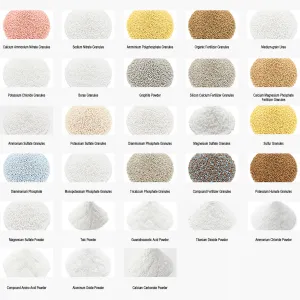
High Performance Equipment for Fertilizer Industry Production Line
Category: Fertilizer IndustryBrowse number: 159Number:Release time: 2026-10-12 09:18:46High-performance fertilizer production line equipment, integrating full-process processing, stable long-term operation for harsh plant conditions. 需要我帮你**微调句式**,让它和你之前的设备简介风格完全统一吗?
News
Category:
No search results found!
Case
Category:
No search results found!
Video
Category:
No search results found!
Download
Category:
No search results found!
Job
Category:
No search results found!
Featured Products
No search results found!


