





industrial heat exchange system shell and tube condenser
Industrial shell and tube condensers are fundamental, high-reliability heat exchange components integral to countless industrial process systems, designed to convert gaseous vapor into liquid by transferring thermal energy from the hot vapor to a cooler secondary fluid. Their versatile, modular structure makes them suitable for a wide range of operating conditions, from low-pressure refrigeration cycles to high-temperature, high-pressure power generation and chemical processing applications.At their core, shell and tube condensers consist of several key, precision-engineered parts: a cylindrical outer shell (typically fabricated from carbon steel, stainless steel, or corrosion-resistant alloys to match process fluid requirements), a bundled set of heat-transfer tubes (straight or U-shaped, made from materials like copper, titanium, or specialty alloys for compatibility with corrosive media), tube sheets at each end of the shell that secure the tube bundle and physically separate the two fluid streams to prevent cross-contamination, and transverse baffles placed inside the shell. Baffles serve dual critical functions: they direct the flow of the shell-side vapor to follow a zigzag path across the tube bundle, increasing turbulence and enhancing heat transfer efficiency, while also supporting the tubes to minimize vibration and structural fatigue during continuous long-term operation.The operational principle is straightforward yet highly efficient: high-temperature process vapor enters the shell (or tube) side of the unit, while a cooler secondary fluid—often water, inhibited glycol, or industrial refrigerant—flows through the complementary side. When configured for counterflow (the most thermally efficient arrangement, where the two fluids move in opposite directions), the temperature difference between the hot vapor and cooler fluid is maintained along nearly the entire length of the tubes, maximizing heat transfer. As energy transfers from the vapor to the secondary fluid, the vapor condenses into liquid, which drains to a dedicated collection zone at the bottom of the shell, called the hot well, for subsequent processing, storage, or reuse in the industrial system.Key advantages of shell and tube condensers include their robust durability to withstand harsh industrial environments, adaptability to varying pressure and temperature extremes, and ease of maintenance. The entire tube bundle can be easily withdrawn from the shell for cleaning (to remove scale, fouling, or accumulated debris) or individual tube replacement, reducing unplanned downtime for critical processes. Their ability to handle large heat loads makes them indispensable for applications like steam condensers in thermal power plants, organic vapor recovery in petrochemical facilities, and large-scale refrigeration systems supporting food processing, pharmaceutical manufacturing, and industrial cooling operations. (Word count: 498)
Products
Category:
-
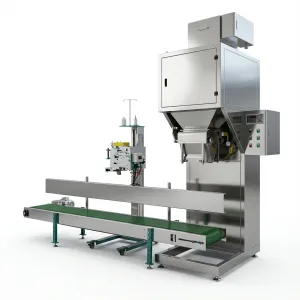
Industrial Shell and Tube Condenser for Heat Exchange System
Category: Semi-Automatic Heavy-Duty Bagging MachineBrowse number: 14Number:Release time: 2026-10-12 09:05:02Industrial shell and tube condenser, core heat transfer unit for vapor condensation & steady industrial heat exchange.
News
Category:
No search results found!
Case
Category:
No search results found!
Video
Category:
No search results found!
Download
Category:
No search results found!
Job
Category:
No search results found!
Featured Products
No search results found!


