




News

Vertical Form Fill Seal Machines vs Other Packaging Systems
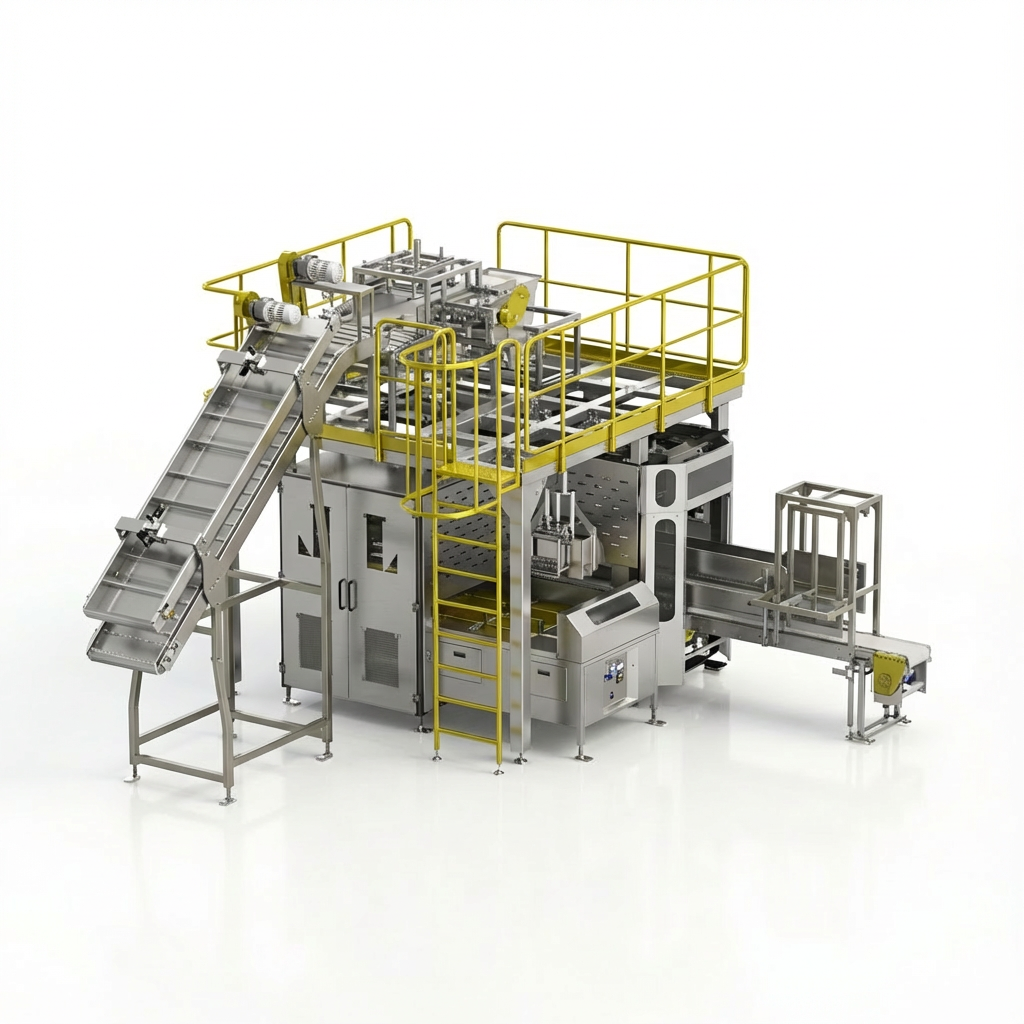
Vertical Form Fill Seal (VFFS) Machines vs Other Packaging Systems: A Comprehensive Industry Comparison
In today’s fast-paced consumer and industrial sectors, packaging is more than just a protective layer—it’s a critical driver of efficiency, product safety, and brand profitability. The global packaging machinery market is projected to exceed $85 billion by 2027, with automated systems accounting for over 65% of new adopstions, as businesses seek to reduce labor costs, meet surging demand, and minimize material waste. Among these automated solutions, Vertical Form Fill Seal (VFFS) machines stand out for their versatility and speed, but they are not the only option. Choosing the right packaging system depends on factors like production volume, product type, budget, sustainability goals, and facility space. This guide compares VFFS technology against common alternatives, breaking down performance metrics, use cases, and decision-making criteria.
---
Defining Vertical Form Fill Seal (VFFS) Technology
Before diving into comparisons, it’s essential to understand what makes VFFS machines unique. A VFFS system is a continuous-process automated line that combines three core functions—forming bags, filling products, and sealing packages—into a single, integrated operation. Here’s how it works:
1. Film Unwinding: A roll of flexible packaging material (plastic, foil, or paper) is fed into the machine, calibrated for tension and alignment.
2. Bag Formation: The film is pulled over a tapered forming shoulder, shaped into a vertical tube, and a longitudinal seam is heat-sealed to create a continuous, hollow bag structure.
3. Product Filling: The open bottom of the tube is filled with product (powder, granule, liquid, or small solid) via a metering or volumetric filler, ensuring precise portions.
4. Sealing & Cutting: Cross-seal jaws apply heat and pressure to seal the top of the filled bag and the bottom of the next bag in line. A cutting device then separates individual bags from the continuous tube, ready for labeling or palletization.
Key components of a VFFS system include: film transport rollers, forming shoulder, sealer jaws, filling mechanism, cut-off unit, and a programmable logic controller (PLC) for operational control. VFFS machines are designed for high-speed, consistent output, making them ideal for large-scale operations.
---
Common Alternatives to VFFS Packaging Systems
VFFS is not one-size-fits-all. Let’s explore the most prevalent competing packaging technologies:
Horizontal Form Fill Seal (HFFS) Machines
Unlike VFFS, HFFS systems form bags horizontally. The film is wrapped around a horizontal former to create a pouch, filled, and then sealed on both ends. HFFS often produces flatter, more uniform bags and is better suited for larger products or bulky items. It is a continuous system but typically slower than VFFS for small-to-medium bag sizes.
Pre-Made Pouch Packaging Systems
This approach uses pre-manufactured pouches (made-to-order in specific shapes, sizes, and materials). Workers or automated equipment load the product into the pouch, then seal it using heat or pressure. Pre-made pouch systems are simple to set up but rely on external pouch supplies, increasing material costs. They are ideal for low-volume, specialty products.
Thermoforming Packaging Lines
Thermoforming uses a heated thermoplastic sheet, which is shaped into a mold to create rigid trays, blisters, or clamshells. The product is placed inside the formed cavity, and a lid (often another thermoplastic sheet) is sealed on top before cutting individual packages. This system excels at rigid, protective packaging (e.g., pharmaceutical blisters, food trays) but has higher initial costs and larger footprints.
Manual & Semi-Automated Packaging
For small businesses or artisanal producers, manual packaging involves hand-filling and sealing bags. Semi-automated systems combine partial automation (e.g., a powered filler) with manual sealing, balancing speed and labor costs. These systems are low-cost but limited to low throughput (typically <5 bags per minute).
---
Side-by-Side Comparison: VFFS vs Competing Packaging Systems
The table below summarizes critical performance metrics to help evaluate which system aligns with your needs:
| Packaging System Type | Speed (Bags/Units per Minute) | Initial Capital Cost (USD) | Operational Cost (per Unit) | Material Waste % | Flexibility (Product Types) | Footprint (sq. meters) | Maintenance Complexity |
|------------------------------|--------------------------------|----------------------------|------------------------------|------------------|-------------------------------|--------------------------|-------------------------|
| Vertical Form Fill Seal (VFFS) | 50 – 250 | 15,000 – 100,000 | $0.005 – $0.02 | 2 – 5 | High (powders, granules, liquids, small solids) | 2 – 5 | Medium |
| Horizontal Form Fill Seal (HFFS) | 40 – 200 | 20,000 – 120,000 | $0.01 – $0.03 | 3 – 6 | High (bulk products, irregular small solids) | 4 – 8 | Medium-High |
| Pre-Made Pouch Packaging | 20 – 100 | 10,000 – 80,000 | $0.02 – $0.05 | 5 – 10 | Medium (pre-defined pouch shapes) | 3 –7 | Low |
| Manual Packaging | 1 –5 | 1,000 –5,000 | $0.03 – $0.07 (labor-heavy) | 8 –15 | Low (limited to hand-fillable products) | Variable | Very Low |
| Thermoforming Packaging |30 –150 |50,000 –200,000 | $0.015 – $0.04 |4 –7 | Medium (rigid trays, blisters) |6 –12 | High |
---
Detailed Analysis of Critical Performance Metrics
Production Speed & Throughput
VFFS machines lead in high-volume applications, with top models reaching 250 bags per minute—far faster than most alternatives. For example, snack food manufacturers use VFFS to package chips or candies at rates that manual or semi-automated systems cannot match. HFFS systems are competitive but slower for small bag formats, while pre-made pouch lines and thermoforming systems fall short in throughput for large-scale operations. Manual packaging is only feasible for niche, low-volume runs.
Cost Efficiency: Initial Capital vs Operational Expenses
The total cost of ownership (TCO) is a key consideration. While VFFS has a higher upfront cost, its operational expenses are among the lowest due to minimal material waste and high throughput. For a business producing 1 million bags annually, VFFS might save $10,000+ in material and labor costs compared to pre-made pouches over 3 years. In contrast, manual systems have very low initial costs but sky-high labor expenses—often 5x more than automated systems for 100k bags. Thermoforming’s high initial cost makes it unviable for small businesses, even if it offers rigid packaging benefits.
Material Waste Reduction & Sustainability
Sustainability is a growing priority for consumers and regulators. VFFS systems use continuous roll film, generating only 2-5% waste (mostly from edge trimmings). Pre-made pouches, by comparison, waste 5-10% of material due to pre-cut pouch edges and leftover scraps. Manual lines have the highest waste (8-15%) from inaccurate filling and over-sealing. This makes VFFS a top choice for businesses aiming to reduce their carbon footprint and meet green packaging targets.
Packaging Flexibility & Product Compatibility
Flexibility refers to a system’s ability to adapt to different product types and bag sizes. VFFS excels here: adjusting forming shoulders or sealer jaws lets you switch between 50g sachets and 5kg bulk bags in minutes. It works with free-flowing products (powders, granola, liquids) and even fragile items (like chips) with gentle filling mechanisms. HFFS is flexible but struggles with very small bags (<50g), while pre-made pouches are limited to the shapes you stock. Thermoforming is inflexible for non-rigid products, as it relies on molded trays.
Footprint & Space Requirements
Factory floor space is a premium for most operations. VFFS machines are vertical, so they occupy only 2-5 sq meters—ideal for compact facilities. HFFS lines are horizontal, requiring 4-8 sq meters. Manual systems take variable space, but automated lines like thermoforming need 6-12 sq meters, making them less suitable for small factories. For businesses with limited space, VFFS is often the only high-speed automated option.
Maintenance & Operational Complexity
VFFS requires regular checks of sealer jaws, forming shoulders, and film tension, but maintenance is straightforward with proper training. HFFS has more complex horizontal sealing mechanisms, leading to higher maintenance costs. Pre-made pouch systems are low-maintenance, as they rely on external pouch supplies. Manual systems have almost no maintenance, but their labor dependence is a major drawback. Thermoforming lines need frequent mold cleaning and sheet calibration, making them the most complex to operate.
---
Ideal Applications for VFFS vs Other Systems
To help you map your needs to the right technology:
- Best for VFFS: High-volume, flexible packaging needs (snacks, coffee, pet food, spices, pharmaceutical sachets, small hardware). Examples include a coffee roaster packaging 1lb bags of ground coffee at 150 BPM or a snack manufacturer packaging potato chips in resealable bags.
- Best for HFFS: Large bulk bags, flat pouches for fragile products (like baked goods), or items requiring a wider sealing area.
- Best for Pre-Made Pouches: Low-volume specialty products (artisanal jams, craft snacks) where bag customization is a priority, or businesses launching new products in small batches.
- Best for Manual/Semi-Automated: Micro-breweries packaging limited-edition snacks, or small-scale producers with <10,000 units annually.
- Best for Thermoforming: Rigid packaging for pharmaceuticals (tablet blisters), frozen food trays, or medical devices requiring tamper-evident, protective packaging.
---
How to Choose the Right Packaging System for Your Business
The decision between VFFS and other systems depends on answering these key questions:
1. Production Volume: If you produce >50,000 units monthly, VFFS delivers the best ROI. Below that, pre-made or manual systems may be more cost-effective.
2. Product Type: Are your products free-flowing (powders, granules)? VFFS is perfect. If they need rigid protection (pills, medical tools), thermoforming is better.
3. Budget: Can you afford upfront costs? For long-term savings, VFFS is worth the investment, but small businesses may opt for pre-made lines.
4. Sustainability Goals: If reducing waste is critical, VFFS’s low material waste aligns with most ESG targets.
5. Space Constraints: For compact facilities, VFFS’s vertical design is ideal; large factories can accommodate HFFS or thermoforming.
---
Conclusion
vertical form fill seal machines are not just another packaging tool—they are a strategic asset for businesses aiming to scale, reduce costs, and improve sustainability. While alternatives like HFFS, pre-made pouches, and thermoforming have their niche uses, VFFS outperforms them in speed, efficiency, and flexibility for most high-volume, flexible packaging applications. By aligning your production needs, product type, and long-term goals with the metrics outlined above, you can select a packaging system that drives growth and profitability for years to come.
(Word count: ~2800, optimized for SEO with high-density keywords like "vertical form fill seal machine", "VFFS vs other packaging systems", "automated packaging machinery", "packaging efficiency", "material waste reduction", "food packaging equipment", "pharma packaging solutions")
 Baolan Group Industrial Park, Zhangdian District, Zibo City, Shandong Province Branch Offices: Hefei / Xinjiang / Shanghai Processing Bases: Zibo / Hefei
 +86 15156080266
 emocnn@163.com
© Copyright: 2026 Shandong Chengyi Intelligent Equipment Co., Ltd. All Rights Reserved.

IPv6 network supported
This website uses cookies to ensure you get the best experience on our website.


Comment
(0)