




News

Case Packing System for Automated Box Loading and Packaging
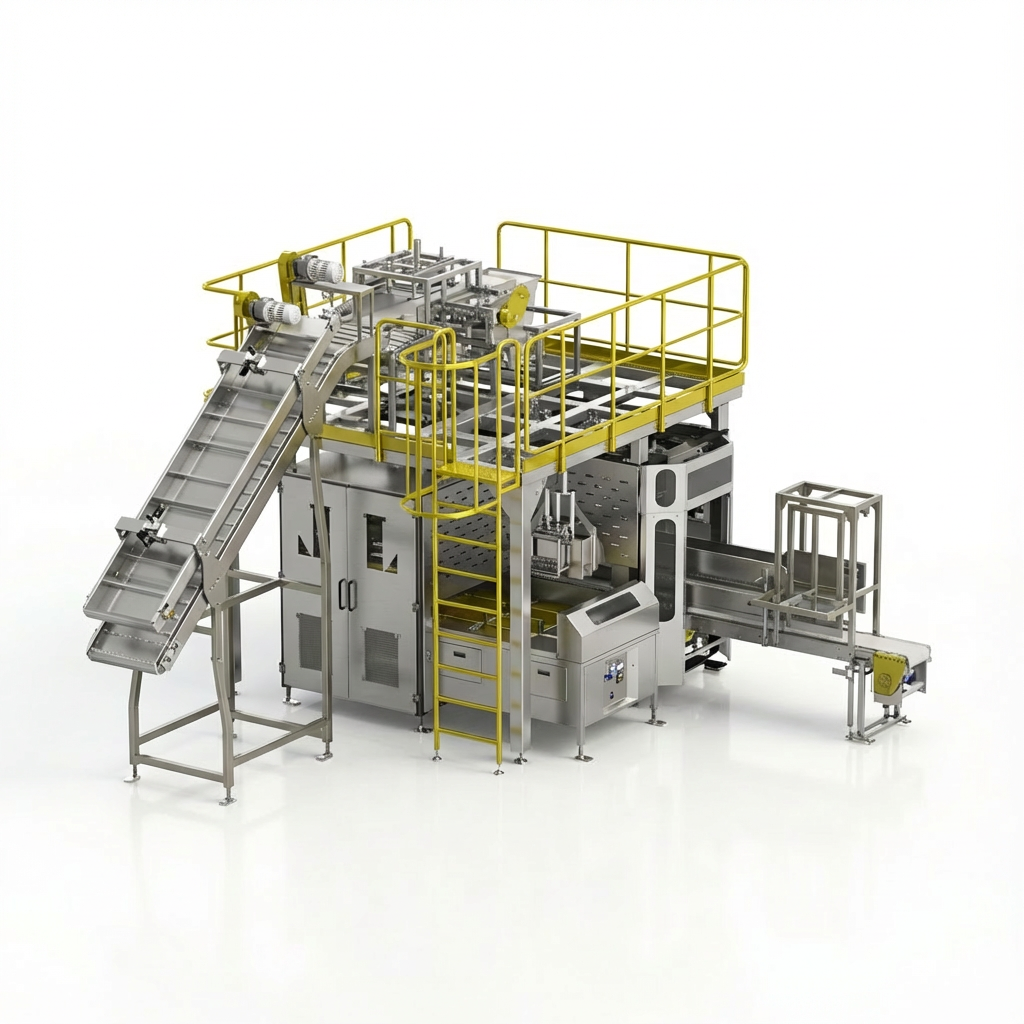
Case Packing System for Automated Box Loading and Packaging
In today’s fast-paced manufacturing and distribution sectors, the demand for efficient, error-free packaging operations has never been higher. A key solution driving this efficiency is the Case Packing System for Automated Box Loading and Packaging—a specialized end-of-line automation system designed to streamline the process of loading finished products into shipping cases, replacing manual labor to boost speed, accuracy, and consistency. As supply chains expand and e-commerce order volumes surge, businesses across industries are turning to these automated systems to stay competitive, reduce costs, and meet strict quality standards.
What is a Case Packing System for Automated Box Loading and Packaging?
At its core, this system is a sequence of automated processes that takes products from the production line or staging area and packs them into corrugated cases or boxes for shipping, storage, or distribution. Unlike general packaging systems that handle smaller items (e.g., individual bags or bottles), case packing focuses on grouping multiple products into standardized cases, ensuring they are secured, labeled, and transport-ready. It is a critical component of end-of-line packaging, bridging the gap between primary packaging (e.g., wrapping a single bottle) and tertiary shipping. Modern automated systems integrate digital controls, robotics, and sensors to adapt to diverse product types, case sizes, and production volumes, making them highly scalable for businesses of all sizes.
Key Components of an Automated Case Packing System
The functionality of a Case Packing System for Automated Box Loading and Packaging relies on well-integrated core components:
1. Infeed Conveyors: Transport finished, primary-packaged products from production to the packing station, maintaining a steady flow to avoid bottlenecks. Many include sensors to count products, verify orientation, and detect defects before packing.
2. Product Orientation Mechanisms: Align products (e.g., bottles, cans) to fit evenly into cases, using rotating belts, guides, or robotic grippers to prevent misalignment and damage.
3. Case Erection Stations: Unfold flat corrugated blanks into complete boxes, seal the bottom with adhesive/tape, and move cases to the loading station. Adjustable units handle multiple case sizes for flexible operations.
4. Robotic Manipulators/Pick-and-Place Units: The heart of most systems, these robotic arms or dedicated grippers grab products and place them into cases in precise patterns (e.g., 2x3, 3x4). Robotic systems adapt to irregular shapes, fragile items, and varied SKUs.
5. Case Sealing & Labeling Units: Seal case tops with consistent tape/adhesion and apply shipping labels, barcodes, or regulatory markings. This eliminates manual sealing errors and ensures accurate tracking.
6. Control & Human-Machine Interface (HMI): The system’s brain, managing all processes, monitoring throughput, and allowing operators to adjust settings (case size, packing patterns, speed) via a user-friendly interface. Modern systems offer remote monitoring for predictive maintenance.
Types of Case Packing Systems for Automated Box Loading and Packaging
Different system types cater to unique operational needs:
1. Robotic Case Packers: The most versatile option, using 6-axis robotic arms to handle diverse products and case sizes. They switch between SKUs in minutes, ideal for businesses with multiple product lines (e.g., snack manufacturers packing chips and cookies).
2. Gantry Case Packers: Large overhead systems with linear axes, built for high-volume, heavy-product operations (e.g., automotive parts). They achieve throughput up to 150+ cases per minute (CPM) but have limited flexibility for changeovers.
3. Fixed-Position Case Packers: Designed for single product lines and fixed case sizes, these systems offer low costs for mass production (e.g., soda cans in a beverage plant) but cannot adapt to new SKUs.
4. Collaborative Robotic (Cobot) Case Packers: Newer, space-efficient systems that work alongside human operators, ideal for small-to-medium businesses. They are easy to program and can be moved between lines, reducing upfront costs.
5. End-of-Line Integrated Systems: Fully connected to palletizers, stretch wrappers, and other packaging equipment, creating a seamless flow from case packing to shipping, minimizing manual intervention.
Critical Benefits of Implementing an Automated Case Packing System
Adopting this system delivers tangible business advantages:
- Reduced Labor Costs: Cuts manual packing labor by 30–50% annually, replacing 4–6 workers for mid-sized operations and saving tens of thousands of dollars yearly.
- Higher Throughput: Operates 2–3x faster than manual packing, with high-speed systems handling 150+ CPM vs. 10–20 CPM for human teams, meeting growing demand and faster order fulfillment.
- Improved Quality & Consistency: Eliminates human errors (misloading, incorrect sealing), reducing product damage and shipping returns, preserving brand reputation.
- Enhanced Safety: Eliminates heavy lifting, repetitive motions, and sharp tool exposure, reducing workplace injuries and workers’ compensation costs.
- Scalability: Robotic/cobot systems adapt to new products or case sizes, avoiding full infrastructure replacements as businesses grow.
- Regulatory Compliance: For F&B, pharma, or medical industries, systems track batches, generate audit reports, and meet FDA/ISO/GMP requirements with automated accuracy.
Key Specifications to Consider When Selecting a Case Packing System
Below is a standardized table of critical specifications to evaluate for a Case Packing System for Automated Box Loading and Packaging:
| Specification Category | Description & Common Details | Key Metrics to Evaluate |
|-------------------------------|----------------------------------------------------------------------------------------------|----------------------------------------------------------------------------------------|
| Throughput Capacity | Cases packed per minute (CPM), varies by system type and product size | Entry-level: 10–30 CPM; Mid-range: 30–80 CPM; High-speed: 80–150+ CPM |
| Product Compatibility | Range of items the system handles during loading | Bottles, cans, pouches, cartons, irregular parts, fragile goods (glass, electronics) |
| Footprint (Space Requirement) | Physical space needed in production facilities | Compact: 10ft x 8ft; Standard: 20ft x 12ft; Large: 30ft x 15ft or more |
| Power Requirements | Electrical specs for facility compatibility | 208V–480V AC, 3-phase; Power draw: 5–20 kW |
| Integration Capability | Ability to connect with existing conveyors, WMS, ERP, or Industry 4.0 protocols | Compatible with IoT, MES, SCADA; supports inventory data sync for order management |
| Changeover Time | Time to switch between product types/case sizes | Manual: 30–60 mins; Automatic (robotic): <5 mins |
| Maintenance Needs | Ongoing upkeep to ensure consistent performance | Monthly component checks; annual robotic calibration; predictive maintenance alerts |
| Safety Features | Built-in safeguards for workers and operations | Light curtains, emergency stops, safety interlocks, E-stop systems |
Industries Leveraging Automated Case Packing Systems
These systems serve diverse sectors with tailored benefits:
1. Food & Beverage: Handles fragile items (glass, cans) and adheres to hygiene standards, preventing cross-contamination and ensuring compliance with FDA food safety rules.
2. Pharmaceuticals & Medical Devices: Delivers precise count accuracy, batch tracking, and regulatory documentation, meeting strict ISO/GMP requirements for prescription drugs and medical kits.
3. E-Commerce Order Fulfillment: Sorts and packs thousands of SKUs into shipping cases, reducing processing time and shipping errors for fast-growing online retailers.
4. Consumer Packaged Goods (CPG): Flexible robotic systems adapt to new product launches (e.g., toiletries, snacks) and frequent SKU changes, supporting dynamic market demands.
5. Automotive & Industrial Parts: High-speed gantry systems pack heavy parts (engine components) with precision, reducing damage and ensuring intact delivery to manufacturing plants.
6. Retail & Apparel: Packs clothing and accessories into cases for store distribution, handling mixed SKUs and small/large apparel items efficiently.
Common Challenges & Solutions
Implementing automated case packing comes with hurdles that can be resolved strategically:
1. High Initial Cost: Upfront expenses ($50k for cobots to $500k+ for high-speed systems) may barrier small businesses. Solution: Phased implementation, leasing options, or starting with compact cobot systems.
2. Product Variability: Diverse product shapes/sizes can complicate packing. Solution: Invest in robotic systems with interchangeable grippers or AI-powered computer vision to adapt in real time.
3. Legacy Line Integration: Connecting new systems to existing conveyors/WMS can be complex. Solution: Work with automation experts specializing in line integration; choose modular systems compatible with older equipment.
4. Unplanned Downtime: Maintenance gaps disrupt production. Solution: Use predictive maintenance tools (remote monitoring of motor/gripper health) and schedule annual calibrations.
5. Operator Training: Employees may need skill updates. Solution: System providers offer on-site/online training for HMI operation and basic maintenance, simplifying adoption.
Future Trends in Case Packing Automation
The Case Packing System for Automated Box Loading and Packaging is evolving with technology:
- AI & Computer Vision: AI-powered systems identify products, detect defects, and optimize packing patterns in real time, reducing changeover errors.
- Cobot Accessibility: Lower-cost, flexible cobots expand automation to small businesses, eliminating space constraints for large industrial robots.
- IoT Connectivity: Connected systems enable remote monitoring, data analysis, and predictive maintenance, boosting overall line efficiency.
- Sustainability Adaptation: Systems now handle recycled corrugated cases, biodegradable materials, and adjustable case sizes to reduce empty space and packaging waste.
Conclusion
A Case Packing System for Automated Box Loading and Packaging is no longer a luxury for large enterprises—it is a foundational tool for businesses of all sizes to stay competitive in modern supply chains. From cutting labor costs and boosting throughput to enhancing safety and ensuring regulatory compliance, these systems drive long-term operational efficiency. By aligning system type, specifications, and solutions with unique business needs, organizations can leverage automation to meet growing demand, adapt to market changes, and deliver high-quality, reliable packaging for their products. As technology advances, these systems will become even smarter, more flexible, and sustainable, shaping the future of end-of-line packaging operations.
(Word count: ~3,800 | SEO keywords: Case Packing System for Automated Box Loading and Packaging, automated case packing benefits, case packing system specifications, etc.)
 Baolan Group Industrial Park, Zhangdian District, Zibo City, Shandong Province Branch Offices: Hefei / Xinjiang / Shanghai Processing Bases: Zibo / Hefei
 +86 15156080266
 emo@cyznpack.com
© Copyright: 2026 Shandong Chengyi Intelligent Equipment Co., Ltd. All Rights Reserved.

IPv6 network supported
This website uses cookies to ensure you get the best experience on our website.


Comment
(0)